Fire risk assessment NewcastleKnow the risks.
Know what comes next.
For the people responsible for Newcastle’s business premises. Practical assessments, recorded findings and a clear order of action.
 Newcastle upon Tyne / From The Quayside To The Business Parks
More Than A Report.
A Basis For Action.
A fire risk assessment is an organised examination of how fire could start, the people it could affect and the precautions needed to protect them. For a Newcastle business, it should describe the premises as they are used today. The useful outcome is a reasoned assessment and an action plan that the responsible person can put to work.
We help businesses scope assessments for commercial buildings, offices, warehouses and managed premises. Related inspections and reviews can address specific questions about fire doors, existing records or changes since the previous assessment. Start with the building use, location and your reason for asking so the right work can be identified.
An assessment considers how the building, the people and the management arrangements interact. Clear exits are important, but so are warning arrangements, staff understanding and the condition of the protective measures. A document cannot make a premises safe unless the findings are acted on.
How We Approach Fire SafetyThe Right Assessment.
The Right Starting Point.
Choose the premises or the question you need to address. We can help clarify the scope if you are unsure.

Commercial Assessments
A practical assessment of the people, activities and fire precautions in your business premises. For landlords, occupiers and the people managing shared buildings.
View Service
Office Assessments
Fire risk assessments for occupied offices, shared workspaces and managed floors. Attention to escape routes, changing occupancy and the responsibilities between tenants.
View Service
Warehouse Assessments
A focused assessment of storage, movement, ignition sources and escape arrangements for warehouses, distribution units and industrial premises.
View Service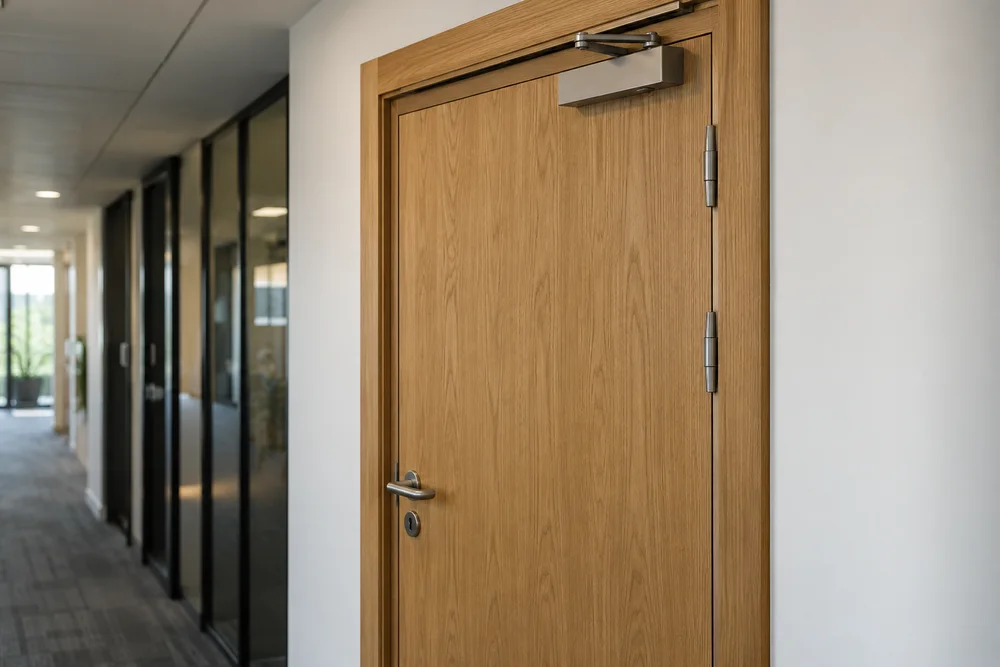
Fire Door Inspections
A recorded examination of commercial fire doors, their condition and their operation. Identify defects and the evidence needed before deciding on repair or replacement.
View Service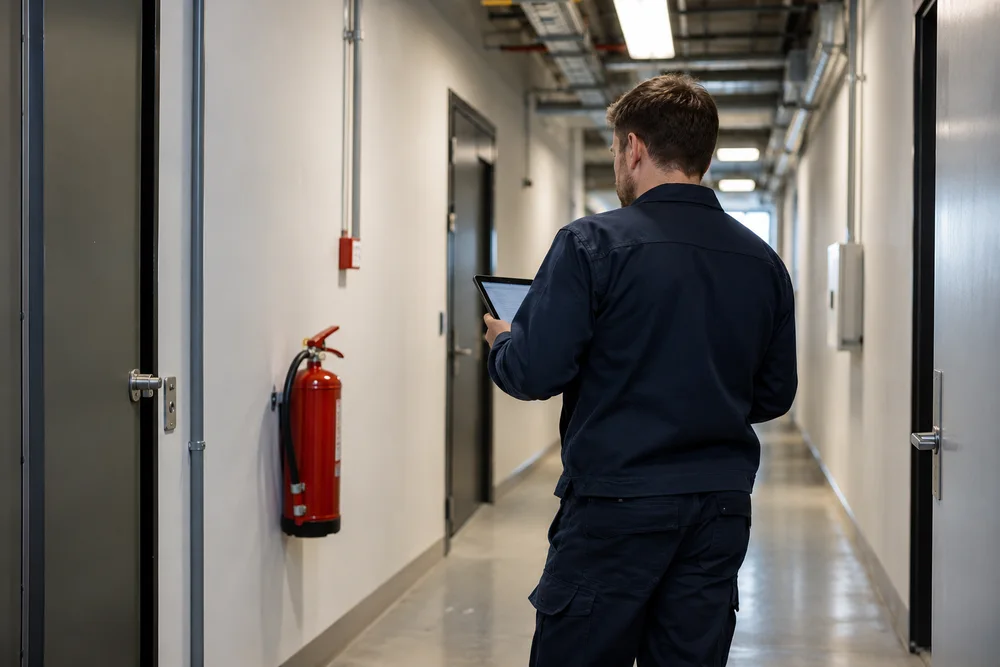
Fire Safety Audits
A structured check of the records, responsibilities and day-to-day controls behind your fire precautions. Useful when taking over premises or checking progress on an action plan.
View Service
Assessment Reviews
Revisit your existing assessment after changes, incidents or unresolved findings. Establish what remains valid and what needs to be assessed again.
View ServiceWho Needs An
Assessment?
Appointing an assessor provides help with the assessment. Responsibility for managing the premises and acting on the findings remains with the responsible person.
In England, the Regulatory Reform (Fire Safety) Order 2005 is the main framework for fire safety in business premises. Employers, owners and people with control of premises can have duties. Newcastle premises should be assessed under the law applying here, rather than guidance intended for Scotland or Northern Ireland.
The requirement covers a wide range of workplaces, including offices, shops, industrial units, schools and other commercial sites. People to consider include employees, visitors, contractors and anyone who may need assistance to leave. A small workforce does not remove the need to understand and manage the risk.
The assessment must be suitable for the premises and kept under review. Current government guidance on recording duties states that the assessment and fire safety arrangements must be recorded in full. Older advice that ties written records only to a staff threshold should not be used as the basis for your arrangements.
Shared premises need co-operation. A tenant may control internal rooms while another party manages the common stair, alarm and final exits. Clarify those boundaries and exchange relevant information, because an escape arrangement can fail at a point outside the area shown on your own floor plan.
The practical first step is to identify what you control and collect the available records. Ask the managing agent about shared precautions and obtain the existing assessment where one is available. The government fire safety responsibilities guide explains the duties and links to guidance for different premises types.
From The First Question
To The Next Action.
A good assessment connects what is seen on site with what needs to happen afterwards.
- 01
Define The Premises
Tell us the postcode, use, approximate floor area and occupied levels. Explain shared areas, unusual activities and what prompted the request so the inspection boundaries can be agreed.
- 02
Examine The Risk
The visit considers ignition, fuel, people and escape. A knowledgeable contact helps explain daily activity, working hours, access restrictions and the records available for the building’s fire precautions.
- 03
Record The Findings
The report should explain its conclusions and limitations. Prioritised actions help separate matters needing prompt attention from improvements that require further investigation, contractor input or management decisions.
- 04
Act And Review
Allocate an owner to each action and keep evidence of completion. Review the assessment as use, layout or occupancy changes, rather than treating the report as a permanent description of the premises.
The Building.
The People.
The Daily Routine.
What The Assessment Looks At
Ignition sources might include electrical equipment, heating, maintenance tasks or the work process itself. Fuel can include stock, packaging, waste and the building fabric. The assessment considers their location and management, rather than treating every item as an equal risk.
The people using the premises are central to the assessment. Visitors may not know the route out, lone workers may be present after normal hours and some occupants may need an agreed evacuation arrangement. Occupancy information helps the assessor understand the conditions that precautions need to support.
Escape routes need to be usable throughout the journey to safety. That includes doors, stairs, final exits and the external route beyond them. Fire-resisting construction and doors may be important in protecting that journey, with defects or missing evidence identified for appropriate follow-up.
Records Support The Inspection
Have the current fire risk assessment, plans, maintenance records and emergency procedures available where possible. Alarm, emergency lighting and door inspection information can show the condition of important precautions. The absence of records should be recorded and addressed, rather than treated as proof that equipment works.
A general assessment is not a substitute for servicing or specialist testing. It may identify the need for a detailed door inspection, compartmentation investigation or other technical advice. Limits to access and uncertainty about concealed features should be stated so the responsible person knows what still needs attention.
What Affects
The Cost?
Fire risk assessment pricing depends on the work needed to understand your premises. Floor area, occupied levels, number of buildings, construction, activities and access arrangements all matter. A warehouse with separate offices and charging areas needs a different scope from a small office suite.
The state of your existing information also affects preparation and reporting. Plans, previous assessments and maintenance records can make the boundaries clearer, while missing or contradictory information may need more investigation. Tell us about shared routes, restricted rooms and any requirement to attend outside normal operating hours.
Ask what the quotation includes. The inspection boundary, report format, action plan, exclusions and arrangements for questions should be clear before appointment. A separate door schedule, intrusive survey or return visit should be identified explicitly rather than assumed to sit within a general assessment.
If you have an enforcement notice, a lease handover or a planned opening, mention it at the start. Those circumstances can affect the information and specialist input required. The enquiry form is a scoping step, and the appointment details and price should be agreed before work begins.

Old Fabric.
New Uses.
Shared Responsibilities.
Newcastle combines converted commercial buildings with modern offices and industrial premises. Ouseburn is a creative and cultural quarter with studios and hospitality venues, while Newcastle Helix brings together businesses and research organisations. Those local facts describe the setting, not the condition of any individual premises.
In a conversion, changed layouts and historic alterations can create questions about protected routes and concealed fire separation. In a managed office development, the more immediate question may be how tenant procedures connect with the building's common systems. The assessment should establish what exists rather than infer safety from the age or appearance of the building.
We cover Newcastle and nearby districts including Gosforth, Heaton, Newburn, Benton, Wallsend and the North Tyneside coast. Business parks such as Quorum and Cobalt add another type of commercial setting. Give the exact postcode and building details so coverage, access and the appropriate scope can be confirmed.
Explore The Areas We CoverLocal context: Invest Newcastle and Newcastle Helix.
After The Visit,
Follow The Findings.
Read the recommendations with the people who can put them into practice. An obstructed route, a missing maintenance record and a technical concern about fire separation each call for a different response. Assign suitable owners and retain evidence so progress can be checked.
A review is useful when circumstances change or the existing conclusions may no longer be valid. Refurbishment, new stock arrangements, altered occupancy or an incident can all affect the picture. A calendar reminder can support this process, but it cannot replace responding to a change when it happens.
Use related services for a defined purpose. A fire safety audit can examine management records and action progress, while a detailed fire door inspection can produce a traceable schedule of door findings. Keep those results connected to the premises assessment so information leads to decisions rather than separate files that nobody reads.
Who Needs A Fire Risk Assessment In Newcastle?
A fire risk assessment is needed for business premises covered by the Fire Safety Order in England. Employers, commercial landlords and people controlling premises may hold responsibilities. The assessment should reflect the building and its activities, with parties co-operating where duties overlap. Identify your area of control before commissioning the work.
What Does A Fire Risk Assessment Include?
A fire risk assessment considers ignition sources, combustible materials, people at risk and the precautions needed for safe escape. It also examines management arrangements and the evidence available for protective systems. The report should describe its scope, limitations and prioritised actions, rather than simply recording that an inspection took place.
How Much Does A Newcastle Assessment Cost?
Fire risk assessment cost depends on the size, use and complexity of your premises, access arrangements and available records. Several buildings or specialist activities may need more assessment time. Send the postcode, approximate floor area, occupied levels and current use so the quotation can set out a meaningful scope and any exclusions.
How Often Should An Assessment Be Reviewed?
A fire risk assessment review should take place regularly and when change or evidence calls the existing conclusions into question. There is no universal legal annual expiry for every business assessment. Refurbishment, altered occupancy, new processes, incidents and unresolved defects can all justify a review before the next planned date.
Do Small Businesses Need A Written Assessment?
A written fire risk assessment is required for businesses covered by the Fire Safety Order, including small premises. Current recording duties are not limited to employers with a particular number of staff. Keep the complete assessment and fire safety arrangements, then record progress on actions so the file reflects what has actually been done.
Can The Business Carry Out Its Own Assessment?
A business can carry out its own fire risk assessment if the person doing it has suitable competence for the premises. Complexity, construction and activities can make specialist help appropriate. Consider whether you can recognise the relevant risks and judge the precautions, rather than relying only on familiarity with the workplace.
Can An Assessment Take Place While We Are Working?
An assessment can often take place while a business is operating, subject to safe access and the agreed scope. Seeing representative activity helps explain storage, occupancy and working arrangements. Identify restricted areas, required escorts and sensitive operations beforehand, and arrange access to the rooms and records needed for a useful inspection.
What Happens After The Assessment?
After the assessment, the responsible person should review the findings, address risks and allocate the recommended actions. Keep evidence of completed work and seek clarification if a recommendation requires specialist design or investigation. Share relevant information with staff and other responsible persons, then keep the assessment under review as conditions change.
Make The Next
Step A Clear One.
Tell us about your building and what you need. We’ll use those details to help establish a suitable assessment scope.
With your agreement, your enquiry may be passed to a suitable local firm to respond. No appointment is made by submitting this form.